This glossary aims to enrich my vocabulary which will be very useful to me throughout my future professional career.
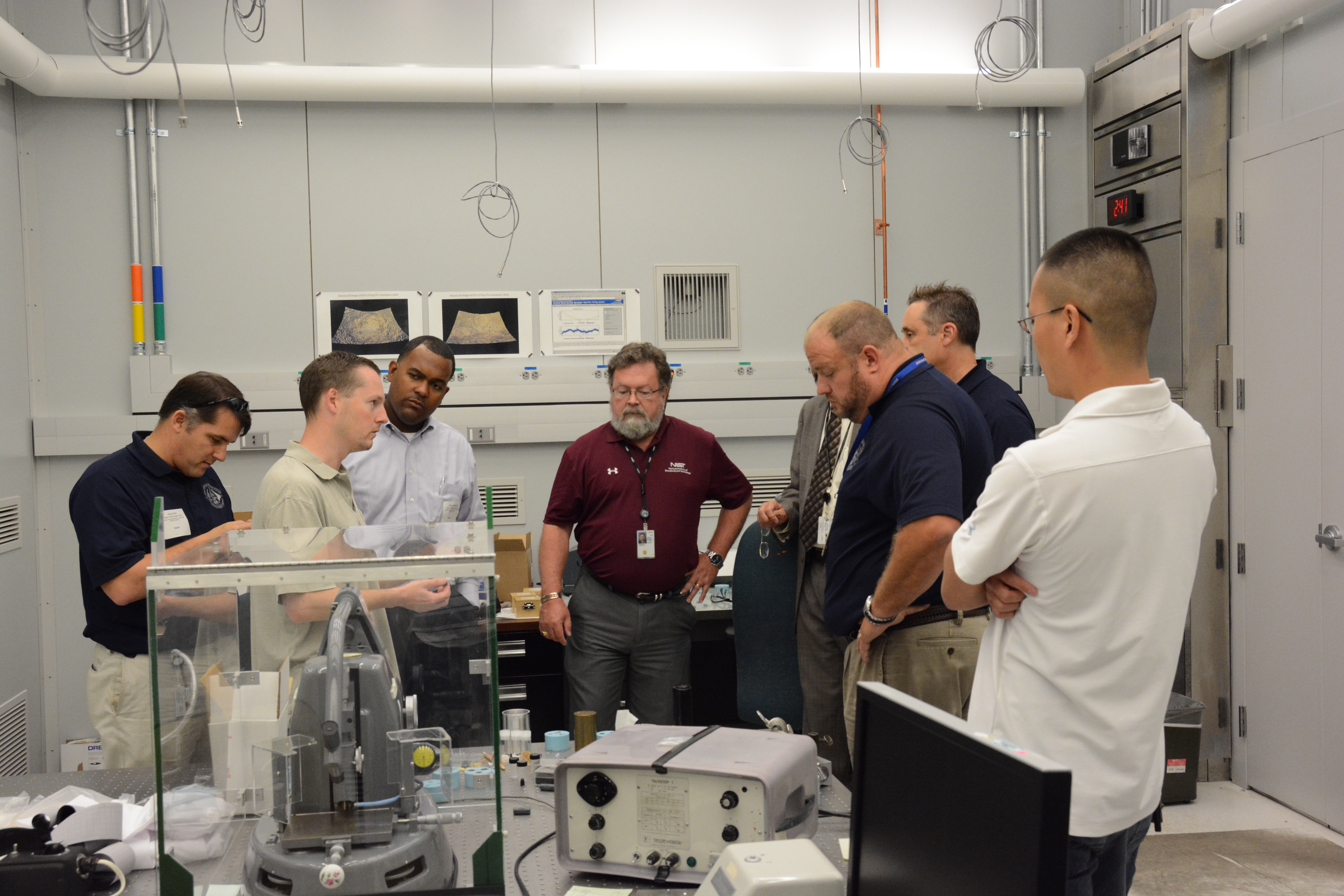
Ballistics service
a phrase
Service where the movement, trajectory, velocity, energy and penetration of firearm projectiles are studied.
Example: covers all areas relating to firearms. He works mainly for the benefit of the investigation services of the National Gendarmerie and the National Police.
en: Service de balistique
Crime
noun
Serious offence, which the laws punish with an afflictive or infamous penalty.
Example: Sometimes the CRIME for which transformation is the punishment is caught between these two extremes, however; and the way they are portrayed seems to be mixed.
en: Crime
Crime scene
a phrase
The place where an offense has been committed and forensic evidence may be gathered.
Example: Miniaturisation of the equipment is in working and therefore can be used more easily at the CRIME SCENE.
en: Scène de crime
Cybercriminality
noun
Cybercrime refers to any crime committed primarily using the Internet and information technology, such as computers, tablets or smart phones.
Example: Hacking into computer systems to steal sensitive data such as personal information (e.g. passwords and banking information).
en: Cybercriminalité
Delinquency
noun
minor crime, especially that committed by young people.
Example: Anomie has been linked to suicide, crime, DELINQUENCY, mental disorders, alcoholism and drug addiction.
en: Délinquance
Education
noun
Implementation of means to ensure the training and development of a human being; means to achieve this.
Example: The capacity strengthening programme of ISNAR offers short-term learning courses on agricultural research management issues, targeting mature professionals (adults) with high EDUCATION, working on the private or public sector, mainly in developing countries.
en: Éducation
Followed
noun
Continuous process of systematic collection of information, according to selected indicators, to provide managers and stakeholders of an ongoing development action, elements on the progress made, the objectives achieved.
Example: This decrease in population was FOLLOWED by the devastating effects of the Plague, which killed off roughly half the population.
en: Suivi
Geocoding
noun
Process of matching criminal offenses and geographic coordinates (usually postal codes) to create maps of the geographic distribution of crimes.
Example: Postal codes
en: Géocodage
Homicide( voluntary or involuntary)
noun
Which causes the death of one or more persons.
Example: Death penalty, violence leading to death, voluntary abortion, euthanasia, war, suicide as well as any act leading to suicide.
en: Homicide( volontaire ou involontaire)
Incidence (of the crime)
noun
The measure of the volume of crime by the number of criminal offenses that have occurred in a given population.
Example: The number of violent offenses per 1000 population.
en: Incidence (du crime)
Incivility
noun
Breach of the rules of behavior in society (rudeness, aggressiveness, etc.).
Example: An impolite or offensive comment.
en: Incivilité
Malefactor
noun
A person who commits a crime or some other wrong.
Example: When you commit a crime, you are known as a criminal and you end up knowing the corners of the prison well.
en: Malfaiteur
Offender
noun
A person or thing that offends, does something wrong, or causes problems.
Example: Clearly, the criminalisation of accessories to the extent where they are as culpable as the principal OFFENDER generates a profound debate, bringing the principle of fair labelling into consideration once again.
en: Contrevenant
Prevalence (of crime)
noun
The proportion of people in a given population who have committed at least one offense or engaged in at least one delinquent behavior over a specified period of time.
Example: victimization in a given population.
en: Prévalence (de la criminalité)
SARA model
noun
SARA, an acronym that stands for Situation, Analysis, Response and Appreciation, is a problem-solving techniques approach to reducing the impact of crime in a community.
Example: Identification of recurring accidents or the effects of the strategies implemented.
en: Modèle SARA
Slang
noun
A type of language that consists of words and phrases that are regarded as very informal, are more common in speech than writing, and are typically restricted to a particular context or group of people.
Example: SLANG and colloquialisms are commonly used and although they age, each generation will have a set of SLANG words that they understand and often use.
en: Argot
Stressor
noun
Event in the life of the criminal felt as a real aggression, and which causes in him even a strong psychological tension likely to mobilize his criminal fantasies or/and to trigger the passage to the act. These are usually major failures or separations, either personally or professionally. But their impact on his behavior depends more on his resentment than on the gravity of the facts themselves; the stressor is distinguished from the "flash" of which narciso-sexual killers often speak.
Example: The primary hypothesis of the STRESSOR-vulnerability model is that individuals learn to use drinking as a coping response when they believe healthier means of coping are unavailable.
en: Stresseur
Tertiary prevention
a phrase
Programs that aim to prevent the repetition of criminal behavior through measures.
Example: The redevelopment of buildings that have been the subject of several offenses or such as programs for the rehabilitation of offenders.
en: Prévention tertiaire
Underworld
noun
The world of criminals or of organized crime.
Example: Hades kidnaps her and takes her by force to the UNDERWORLD despite her protestations, and as such is fairly simple to identify as a rape as opposed to another form of sexual encounter.
en: Pègre
Victimization
noun
The action of singling someone out for cruel or unjust treatment.
Example: All these overriding assumptions become problematic when we examine contemporary examples of VICTIMIZATION, when women are also agents of violence while men become the victims of sexual abuse.